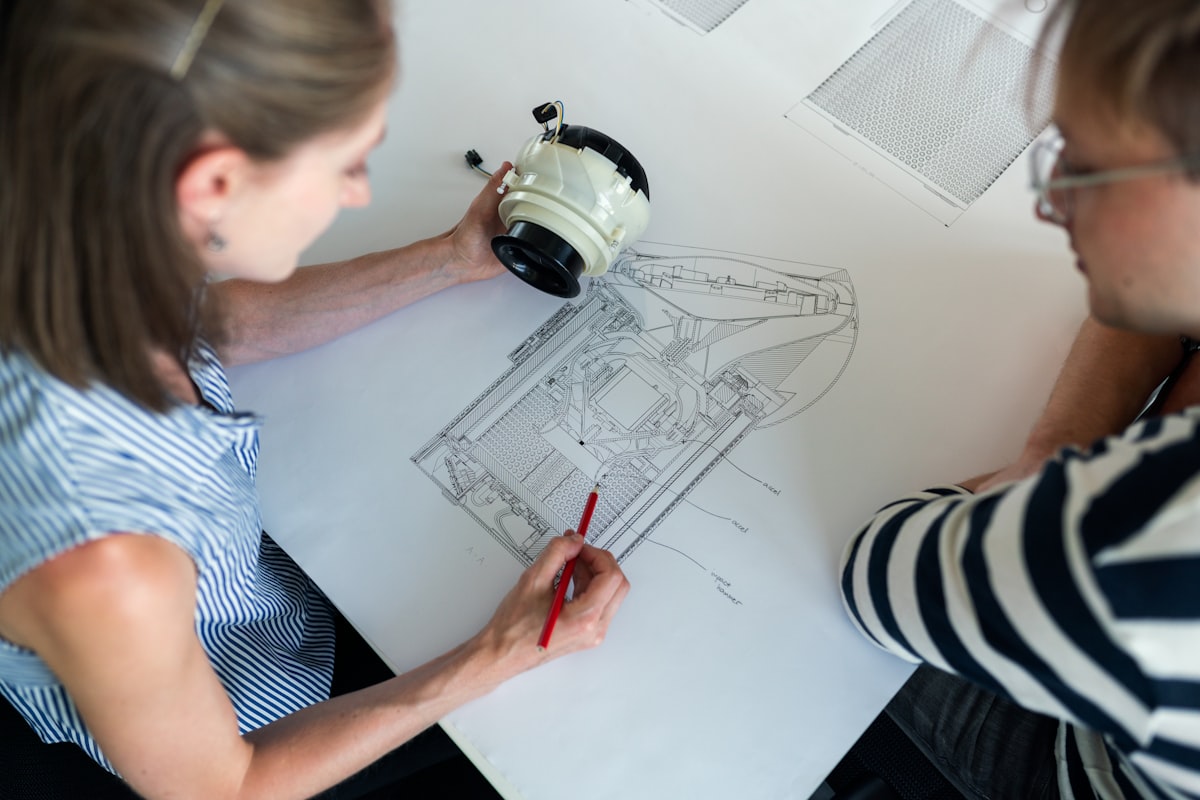
Commutator motors are used where precise speed control and high starting torque are required. They are distinguished by the presence of a brush-collector unit. Let's look at how the commutator motor is structured.
Main components
- Anchor - a rotating part with a winding.
- Commutator - a set of copper plates (lamellas) on the shaft to which the armature winding is connected.
- Brushes - carbon contacts that supply current to the commutator.
- Excitation winding (or magnets) - creates a magnetic field.
- Frame, bearings, shaft.
How it works
Current is supplied through the brushes to the commutator and then to the armature winding. When rotating, the commutator switches the current in the winding sections so that the torque is always directed in one direction. It is the commutator that acts as a mechanical switch.
The weak point is the brushes and commutator
The brush-commutator assembly requires maintenance: the brushes wear out, the commutator becomes dirty and wears out. Typical problems:
| Problem | Solution |
|---|---|
| Brush wear | Replacement, lapping |
| Commutator sparking | Cleaning, grooving |
| Working out commutator | Grooving and groove |
| Breakage of the armature winding | Rewinding of the armature |
Maintenance and repair
Commutator motors are reliable, but require regular inspection brush assembly. When the collector wears out, repair the collector assembly, and the condition is assessed by diagnostics.
Do you need a commutator engine repair in Tashkent? Elektromotors engineers will restore the commutator and brush assembly - leave a request.